Web Hosting vs. VPS: Which One Should You Choose for Your Project?
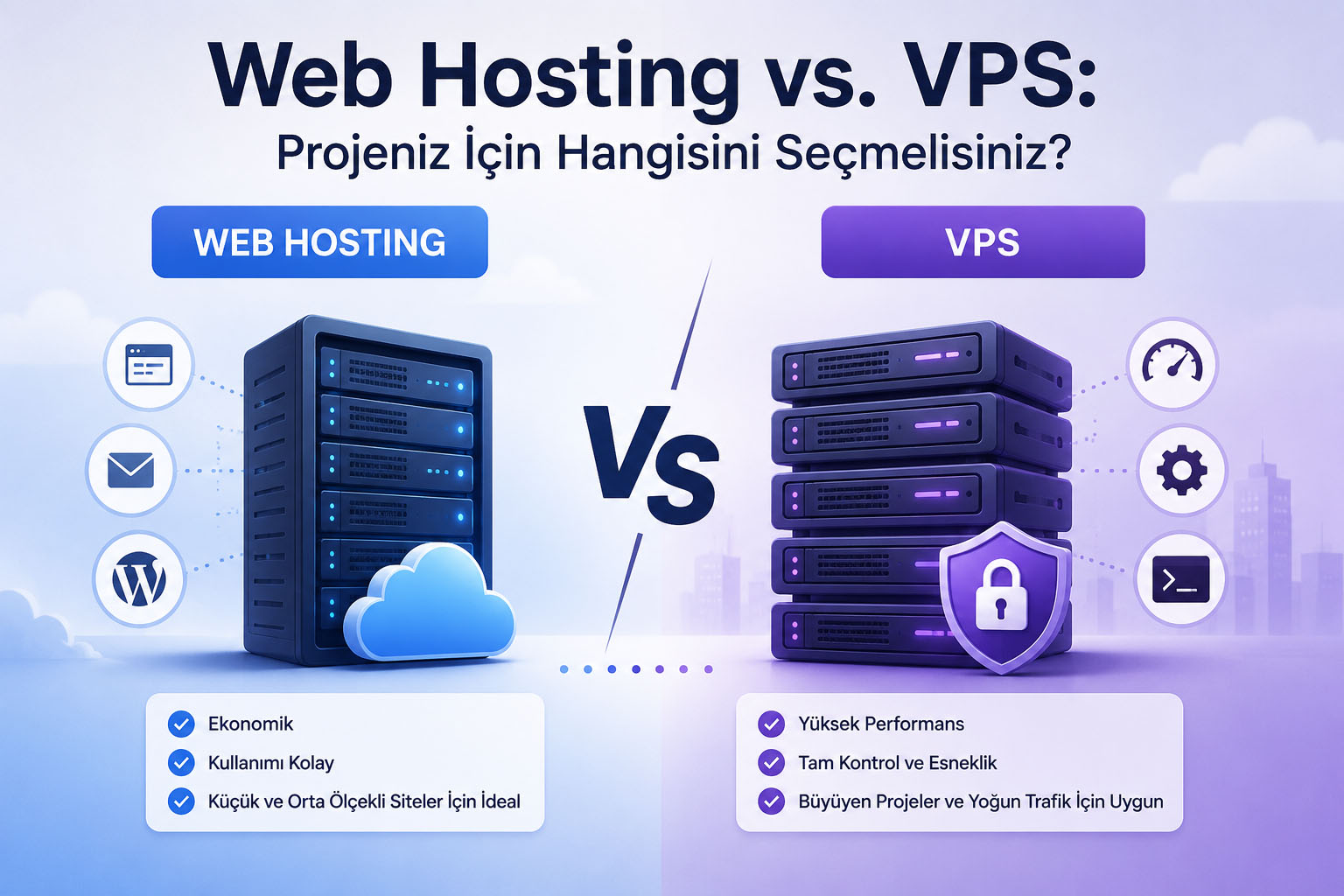
Web Hosting vs. VPS: Which One Should You Choose for Your Project?
Choosing the right hosting solution is one of the most important decisions you'll make when launching a new website or upgrading an existing one. Among the many hosting options available, Shared Web Hosting and Virtual Private Server (VPS) are the two most popular choices.
While both solutions allow you to publish websites on the internet, they differ significantly in terms of performance, resource allocation, security, scalability, customization, and cost. Selecting the wrong hosting environment can lead to slow loading speeds, limited growth potential, unnecessary expenses, and a poor user experience.
In this guide, we'll take an in-depth look at the differences between Web Hosting and VPS hosting, compare their advantages and disadvantages, and help you determine which solution is best suited for your project.
What Is Shared Web Hosting?
Shared Web Hosting is a hosting service where multiple websites share the resources of a single physical server. The server's CPU, RAM, storage, and bandwidth are distributed among all users hosted on that machine.
The hosting provider is responsible for server maintenance, software updates, security patches, hardware management, and network infrastructure. As a customer, you simply focus on managing your website without worrying about server administration.
Because of its simplicity and affordability, shared hosting is the preferred choice for beginners, small businesses, blogs, and personal websites.
What Is a VPS (Virtual Private Server)?
A Virtual Private Server (VPS) is created by partitioning a physical server into multiple isolated virtual machines using virtualization technology.
Unlike shared hosting, each VPS has dedicated resources, including CPU cores, RAM, storage, and operating system allocation. This means your website's performance is not directly affected by the activity of other users on the same physical server.
A VPS also provides root or administrator access, allowing you to install custom software, configure the server environment, and optimize performance according to your specific needs.
It offers an excellent balance between affordability and the flexibility of a dedicated server.
Key Differences Between Web Hosting and VPS
The primary difference between shared hosting and VPS lies in resource allocation.
With shared hosting, server resources are distributed among many users. During periods of high traffic or heavy resource consumption by neighboring websites, your site's performance may be affected.
A VPS, on the other hand, provides dedicated resources that are reserved exclusively for your virtual server. This results in more stable performance and greater reliability.
Another major difference is control. Shared hosting environments are managed by the hosting provider, giving customers limited access to server settings. VPS hosting provides administrative privileges, enabling complete control over the operating system, installed software, security configurations, and server optimization.
Scalability is another important consideration. While shared hosting plans often have fixed resource limits, VPS servers can usually be upgraded quickly by increasing CPU, RAM, or storage as your website grows.
Advantages of Shared Web Hosting
Shared hosting remains one of the most popular hosting solutions because it offers an excellent balance between cost and convenience.
One of its biggest advantages is affordability. It is the most budget-friendly hosting option available, making it ideal for startups and personal projects.
Another benefit is ease of use. Most hosting providers include intuitive control panels such as cPanel or Plesk, allowing users to manage websites, databases, email accounts, backups, and domains without technical expertise.
Since the hosting provider manages server maintenance, security updates, monitoring, and hardware failures, users don't need any system administration knowledge.
For websites with moderate traffic and straightforward hosting requirements, shared hosting provides more than enough performance.
Disadvantages of Shared Web Hosting
The biggest limitation of shared hosting is resource sharing.
Since multiple websites use the same server resources, sudden traffic spikes or poorly optimized neighboring websites can affect your site's speed and responsiveness.
Customization options are also limited. Users cannot install custom server software, modify operating system settings, or make advanced performance optimizations.
As your website grows, you may eventually reach the limits of your hosting plan and need to upgrade to a more powerful solution.
Advantages of VPS Hosting
A VPS offers significantly greater flexibility and performance than shared hosting.
Dedicated resources ensure that your website receives consistent CPU and memory allocation, resulting in improved loading speeds and better overall stability.
Root access allows complete control over your server environment. You can install custom applications, configure web servers such as Apache or Nginx, deploy Docker containers, set up firewalls, and optimize every aspect of your infrastructure.
Security is another major advantage. Because each VPS operates in an isolated virtual environment, issues affecting other virtual servers generally do not impact your system.
VPS hosting is also highly scalable. As your business grows, additional CPU cores, RAM, or storage can typically be added with minimal downtime.
Disadvantages of VPS Hosting
The increased performance and flexibility of VPS hosting come with additional responsibilities.
VPS plans generally cost more than shared hosting plans.
If you choose an unmanaged VPS, you'll be responsible for server administration tasks such as operating system updates, security hardening, backups, software installation, and troubleshooting. This requires a moderate level of technical knowledge.
Improper server configuration may lead to security vulnerabilities or performance issues if not managed correctly.
When Should You Choose Shared Web Hosting?
Shared hosting is an excellent choice for projects such as:
- Personal blogs
- Portfolio websites
- Small business websites
- Company landing pages
- Startup websites
- Small online stores
- Community websites
- Websites with low to moderate traffic
If your project is relatively simple and you prefer a maintenance-free hosting environment, shared hosting is often the best option.
When Should You Choose VPS Hosting?
A VPS becomes the better solution when your project requires greater performance, flexibility, or scalability.
VPS hosting is recommended for:
- High-traffic websites
- Large e-commerce stores
- SaaS applications
- Business management systems (CRM/ERP)
- API servers
- Development and testing environments
- Multiple websites hosted on one server
- Custom software deployments
- Resource-intensive web applications
Businesses expecting continuous growth often benefit from moving to VPS before performance limitations become noticeable.
Which Option Is Better for SEO?
Search engines like Google do not rank websites based on whether they use shared hosting or VPS hosting. However, they do consider factors such as page speed, uptime, server response times, and user experience.
A high-quality shared hosting provider can deliver excellent SEO performance for small and medium-sized websites.
As your traffic grows, however, a VPS may provide faster response times and improved Core Web Vitals, both of which contribute to a better user experience and stronger search engine performance.
Choosing reliable hosting with consistent uptime and fast loading speeds is far more important than the hosting type itself.
Can You Upgrade from Shared Hosting to VPS Later?
Absolutely.
Most professional hosting providers offer seamless migration from shared hosting to VPS hosting.
Many businesses start with an affordable shared hosting plan during the early stages of their website. As visitor numbers increase and resource demands grow, upgrading to a VPS is usually straightforward and requires minimal downtime.
This approach allows you to keep initial costs low while ensuring your hosting environment can scale alongside your business.
Final Thoughts
Choosing between Shared Web Hosting and VPS ultimately depends on your website's current requirements, technical expertise, and future growth plans.
If you're launching a personal website, blog, portfolio, or small business site with moderate traffic, shared hosting offers an affordable, easy-to-manage, and reliable solution. It provides everything most beginners and small businesses need without the complexity of server administration.
On the other hand, if your website demands higher performance, dedicated resources, advanced security, or complete server control, a VPS is a more powerful and scalable solution. It is particularly well-suited for growing businesses, high-traffic websites, e-commerce platforms, and custom web applications.
Rather than focusing solely on today's requirements, consider where your project will be in the next one to three years. Selecting a hosting solution that can grow with your business will save time, reduce migration challenges, and provide a better experience for both your visitors and your team.